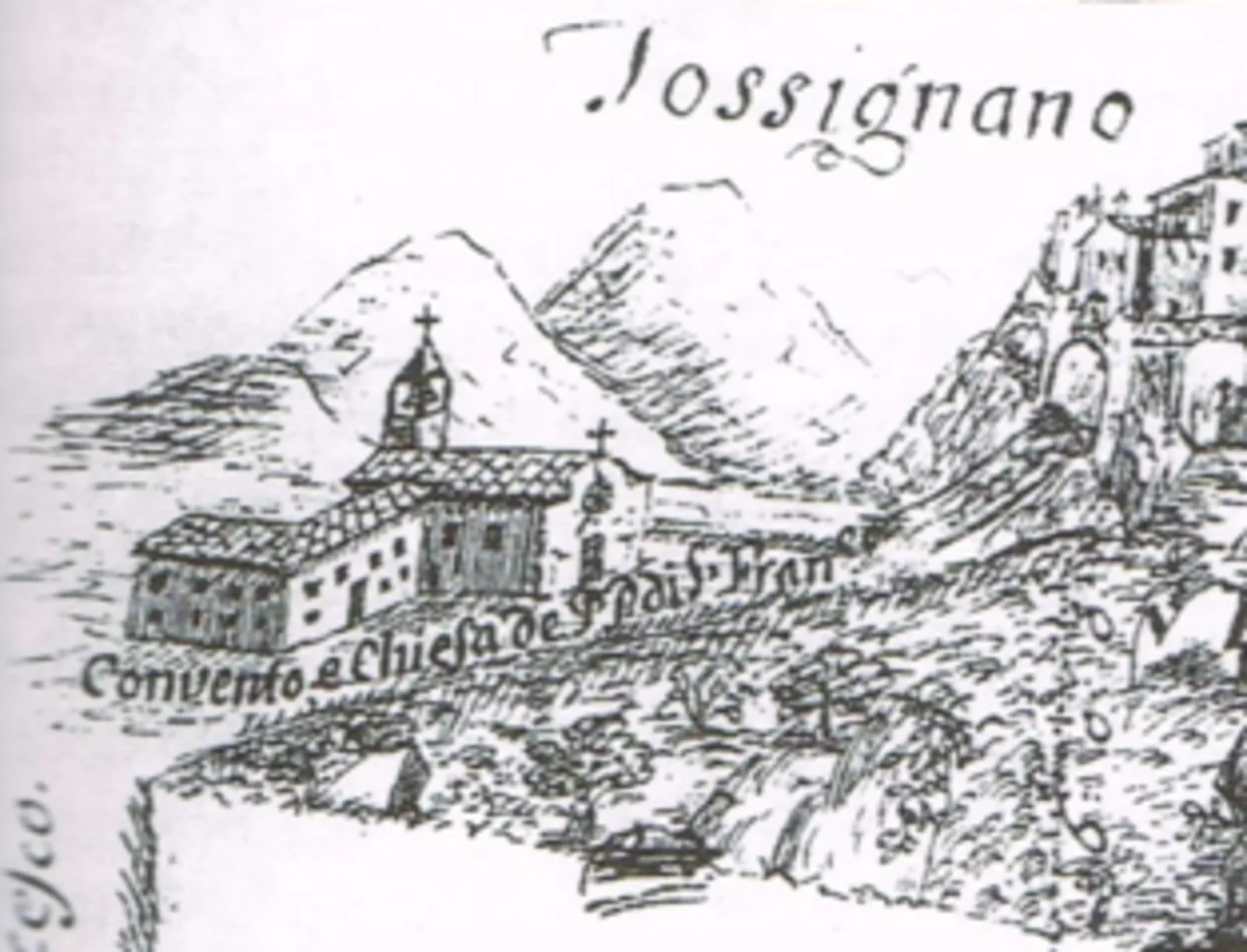
Church and Convent of San Francesco
A Franciscan convent that marked the economic and spiritual history of Tossignano
History of the Convent
The convent and church of San Francesco were built in 1326 outside the Raimondi gate to the east, which was later called Porta San Francesco. The building represented an important center of Franciscan spirituality in the Santerno valley.
The church was 42 feet long and 23 wide, built with arches in Tuscan style and decorated with sculptures by M. Gabbani. Inside there were seven altars, including a side one with a statue of Saint Anthony made by the Imola sculptor Angelo Pio.
According to tradition, San Bernardino da Siena, one of the greatest Franciscan preachers of the 15th century, also preached in that church.
Gallery
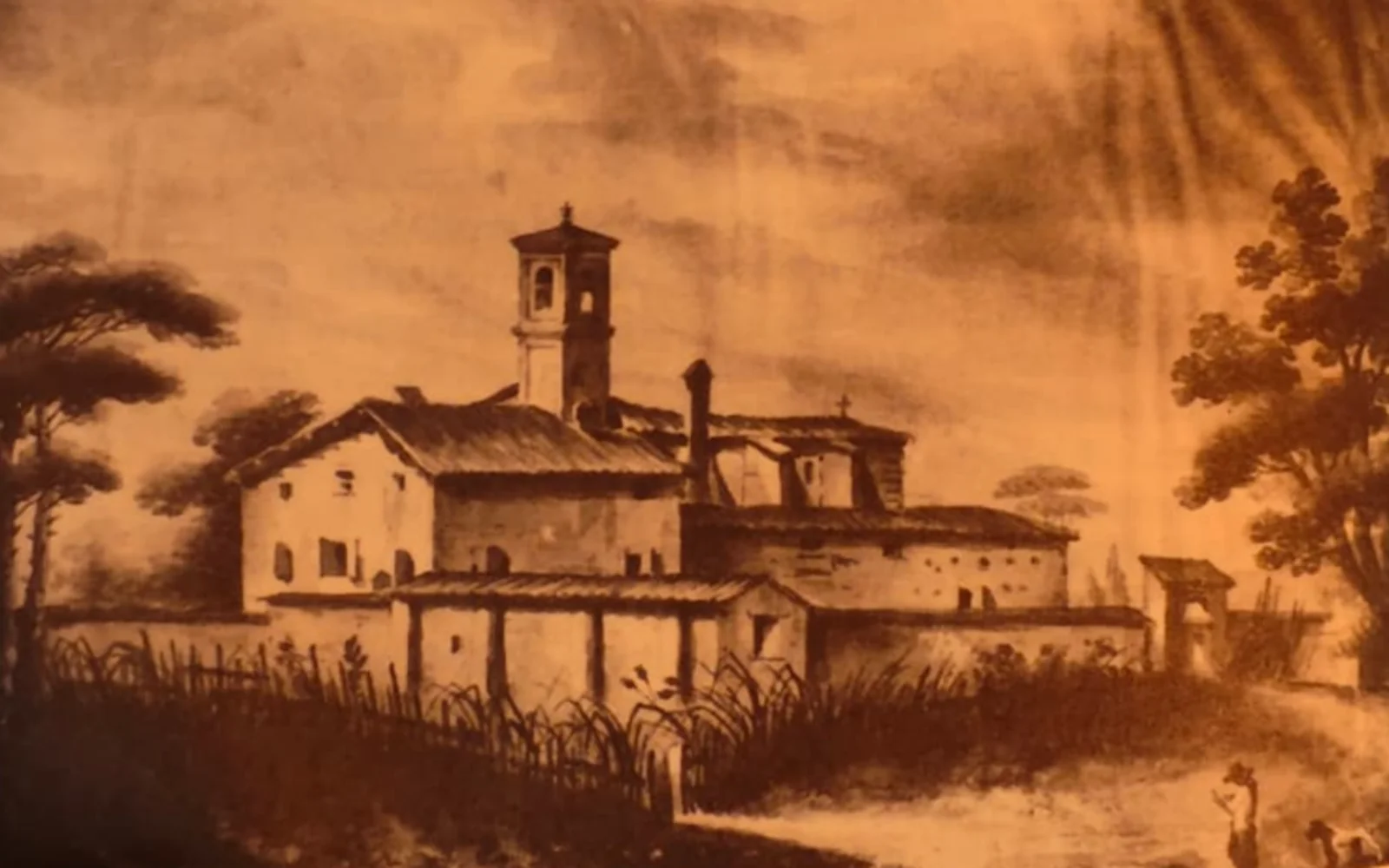
Artistic and Religious Heritage
Franciscan Architecture
The church presented characteristics typical of 14th-century Franciscan architecture, with arches in Tuscan style and a sober but significant decoration made by local craftsmen.
Friar Niccolò Testore
Among the most illustrious members of the convent stands out Friar Niccolò Testore, who died in the odor of sanctity. His memory remains alive in the spiritual tradition of the village.
The Statue of Saint Anthony
The side altar housed a valuable statue of Saint Anthony of Padua, made by the Imola sculptor Angelo Pio, testimony to the Franciscan devotion in the territory.
The Convent Wool Mill
From the convent of San Francesco, an important wool mill was born in the 14th century that produced a type of grey cloth, called "tossignano". This fabric became known and widespread in many parts of Italy, representing an important economic resource for the village.
The manufacturing activity of the Franciscan friars contributed to the economic development of Tossignano, creating a model of integration between convent life and productive activity that characterized the village for centuries.
Historical Memory
Today, only documentary and iconographic testimonies remain of the convent and church of San Francesco, such as the painting preserved at the Municipal Library of Forlì, made by Giacomo Zampa (1732-1808), and the drawing by the expert Fabio Virgilio Baruzzi of Imola from 1770.
The memory of the convent continues to live in the name of the eastern gate of the village and in the stories of local tradition, recalling the importance that the Franciscan order had in the spiritual and economic life of Tossignano.
×
![Ingrandimento]()